Releasing Chama Optics — a photo post-processing app for mirrorless and DSLR camera users, inspired by the travel-loving VTuber Akai Haato (赤井はあと).
EXIF-based photo frame + automatic face detection app, from desktop to mobile with a Rust core
This is probably the first time I’ve openly written an otaku-ish post on this blog. Honestly, I started writing this quite a while ago, but I couldn’t figure out whether to target the audience as developers or VTuber otaku. In the end, I decided to just go with the flow and list everything I developed and contributed.
WARN! This article is still a work in progress. Content may change at any time.
WARN! This article is still a work in progress. Content may change at any time.
WARN! This article is still a work in progress. Content may change at any time. RIIR BEAM
This article is still being written. Content may change along the way.
A test unit recently sent out to the field
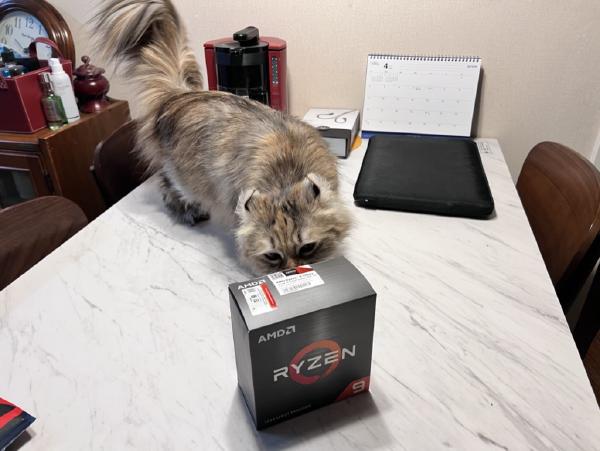
It has been quite a while since ZEN4 started selling, and ZEN3 has also gone through several internal stepping/revision changes that seem to have improved things, so I feel this is an appropriate time to write this article. I originally posted this on other communities as well, and while it may seem tangential to development, it deals with CPU internals, so I am reposting it on my dev blog.
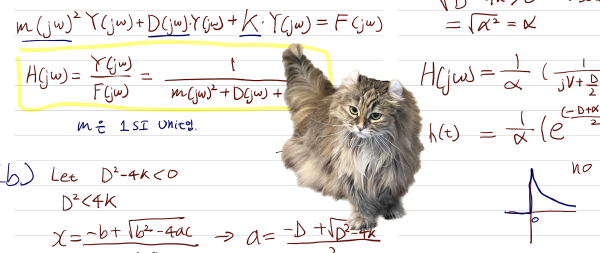
1. Fourier series coefficients for Continuous signal # Asking deriving coefficients comes with periodic signal.: \(x(t) \rightarrow a_k\)
I have been using Rust at the company I recently joined. Five months have passed since I switched jobs, and I would like to describe what I have felt so far. Setting aside the detailed syntactic advantages, I will simply describe my general impressions.
In October 6, Rust for linux is under the linux-next, not stable
Thus this article would be out-of-date before Linux 6.1 stable comes.
Current linux 6.1 rc1 doesn’t contain rust for linux with ARM64. Thus this article play with https://github.com/Rust-for-Linux/linux/tree/for-next/rust
In October, Rust for linux is under the linux-next, not stable
Thus this article would be out-of-date before Linux 6.1 stable comes.
modules, out-of-tree # There are two main ways to develop kernel modules. In-Of-Tree and Out-Of-Tree. In this article, we’re going to make the Out-Of-Tree method a Rust kernel module.
In October 1, Rust for linux is under the linux-next, not stable
Thus this article would be out-of-date before Linux 6.1 stable comes.
This article play with https://github.com/Rust-for-Linux/linux/tree/for-next/rust
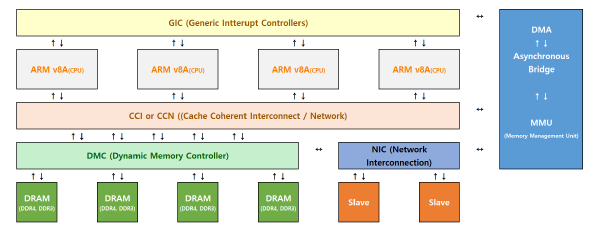
Introduction # ARMv8A, also commonly known as aarch64, is one of the widely used architectures that has largely succeeded ARMv7A. In this article, we will examine the ARMv8A memory system at the IP (Intellectual Property) block level.